Asantehene Otumfuo Osei Tutu II Brings Asante Royalty, Culture and a Call for Diaspora Engagement to the United States
Asantehene Otumfuo Osei Tutu II Brings Asante Royalty, Culture and a Call for Diaspora Engagement to the United States
For a week, the Washington metropolitan area has become an unusual meeting point for African royalty, Black scholarship, African business and diaspora culture as Otumfuo Osei Tutu II, the Asantehene and custodian of the Golden Stool of the Asante Kingdom in Ghana, leads a wide-ranging U.S. visit built around culture, education, investment and the relationship between Africa and its global diaspora.
The Asantehene arrived in the United States on August 23 for a two-week working visit tied to Millennium Excellence Week America 2026, a program organized by the Millennium Excellence Foundation. The visit has connected him with members of the Ghanaian and wider African diaspora communities, students and faculty at Howard University, investors and business leaders, government officials, and traditional leaders.
But beneath the ceremonies and royal pageantry is a larger message: the relationship between Africa and people of African descent in the United States should move beyond symbolism toward education, cultural exchange, investment and long-term institution-building.
That message was particularly clear at Howard University, the historically Black institution in Washington, D.C., where Otumfuo delivered a Royal Lecture on August 25.
A royal visit to the “Black Harvard”
The Asantehene's appearance at Howard carried particular significance for an African American audience. Founded in 1867, Howard has long been one of the nation's most important centers of Black intellectual life and leadership. The university describes itself as a private, historically Black research institution and a global center of scholarship and service.
For Otumfuo, the visit was an opportunity to engage directly with a community whose history and intellectual traditions are deeply connected to Africa.
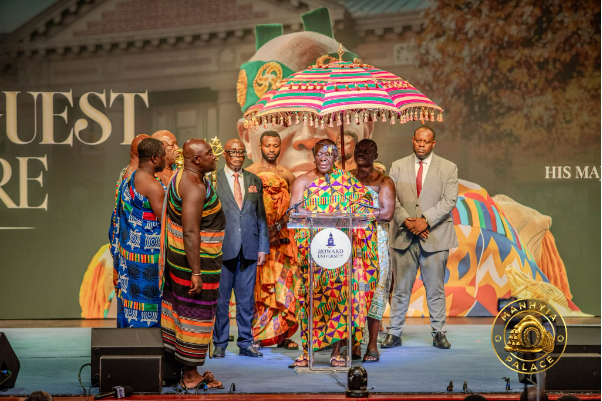
Figure 1: The Asantehene addresses audience at Howard University urging deepened relationship between academia and traditional institutions
His lecture focused on governance, traditional leadership, cultural preservation and the enduring relationship between Ghana and the global African diaspora. Howard said the engagement was designed to bring scholarship, leadership, and culture together to advance people of African descent.
Speaking to the Howard community, Otumfuo called for stronger and more substantive relationships between Africa and its diaspora.
“Let us strengthen the bonds between Ghana and the global African diaspora,” he said, arguing that those relationships should be built not only through ceremonies, but through scholarship, education, investment, cultural preservation, service, enterprise, healing and enduring human relationships.
The Asantehene also proposed what he called a “Howard-Manhyia Dialogue,” linking Howard's academic community with Manhyia Palace in Kumasi. The proposed dialogue would examine questions of governance, culture, and African diaspora affairs and, importantly, subject traditional institutions to serious academic inquiry rather than simply celebrating them.
For Howard officials, the visit also gave Black Americans an opportunity to engage with African traditional leadership on its own terms.
Dr. Tonija M. Hope, Howard's assistant provost for International Programs and executive director of the Ralph J. Bunche International Affairs Center, noted that she could not recall a recent visit by a king and referenced Emperor Haile Selassie's historic 1956 visit to Howard. She said the Asantehene's appearance mattered because African traditional rulers remain influential institutions, even if they aren't always familiar to American audiences.
From culture to capital
The royal visit has also had a strong economic dimension.
On August 27 and 28, Otumfuo attended the Africa Business Investment Summit at MGM National Harbor in Maryland, where African business leaders, government officials, and U.S.-based investors gathered to discuss how to move African investment conversations from aspiration to actual transactions.
The summit was organized as part of Millennium Excellence Week and sought to facilitate significant investment commitments between African enterprises and U.S. capital. Organizers set a target of $500 million in structured capital commitments.
In his keynote address, Otumfuo challenged the familiar narrative that presents Africa primarily through the lens of poverty, infrastructure deficits, and missed opportunities.
Instead, he argued that Africa should increasingly be understood as a central part of the global economic future—and that investors who recognize that shift early will be positioned to benefit.
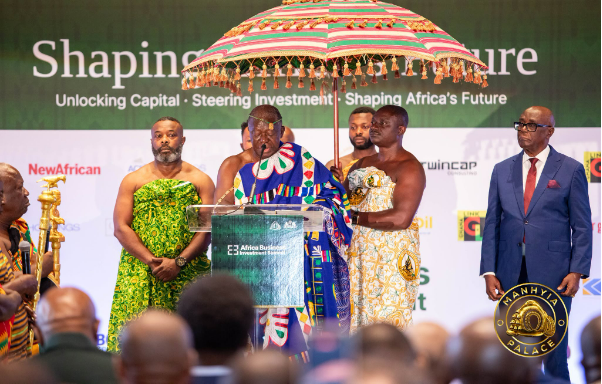
Figure 2: Otumfuo Osei Tutu II speaks to participants at the Africa Business Investment Summit on the continent’s vast opportunities for African American investors
The message resonates particularly with the African American community.
For decades, the relationship between Black America and Africa has largely been expressed through cultural exchange, genealogy, tourism, advocacy and philanthropy. Otumfuo's U.S. visit puts another proposition on the table: diaspora capital can drive African economic development.
That means investment in businesses, infrastructure, technology, energy, manufacturing, tourism and other sectors — not simply sending money home.
Ghanaian officials at the summit reinforced that message, presenting Ghana as an investment destination and highlighting opportunities linked to industrialization, agriculture, technology, energy, mining, tourism and manufacturing. Ghana's position as host of the African Continental Free Trade Area Secretariat was also promoted as a strategic advantage for investors seeking access to the broader African market
The royal entourage has attracted considerable attention in the Washington area, with images of Otumfuo's motorcade, traditional regalia and public appearances circulating widely among Ghanaians and other members of the African diaspora.
Taking Akwasidae to America
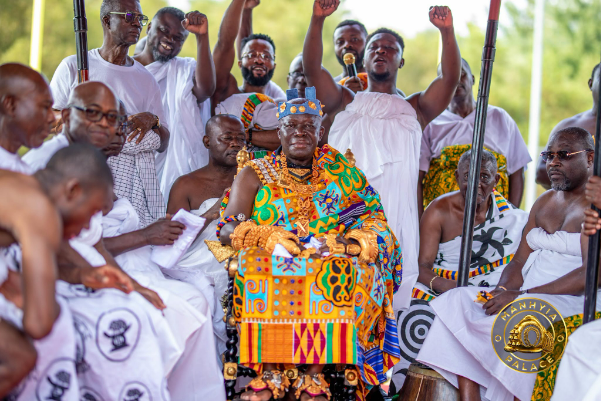
The trip's cultural centerpiece came Sunday, August 30, when Otumfuo presided over Akwasidae Kɛse at Bowie State University in Maryland.
Akwasidae is one of the Asante people's most important traditional observances. It honors ancestors, affirms cultural identity, recognizes leadership, and reinforces the bonds connecting generations.
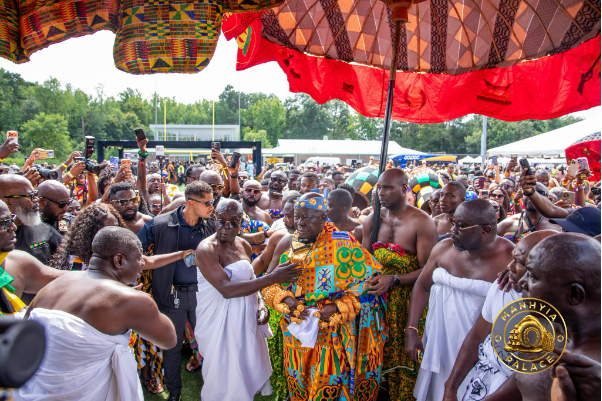
Figure 3: The Asantehene brings rich cultural splendor to Bowie State University during the Akwasidae celebrations
Bringing the ceremony to Bowie State University placed one of Asante's most recognizable traditions in the heart of a historically Black American community.
The celebration drew together Asantes and other Ghanaians, African Americans, traditional leaders, students, community leaders, and friends of Ghanaian culture. Bowie State said it was honored to host the Asantehene, while Prince George's County officials promoted the event as a chance for residents to experience a major expression of African heritage and tradition.
The significance goes beyond the spectacle of chiefs in elaborate regalia, drumming, dancing, and royal processions.
For many African Americans, Ghana has become an important point of connection in the search for African history and identity. The Asante Kingdom holds a prominent place in that history, with centuries-old political, cultural, and artistic traditions as part of West Africa's larger story.
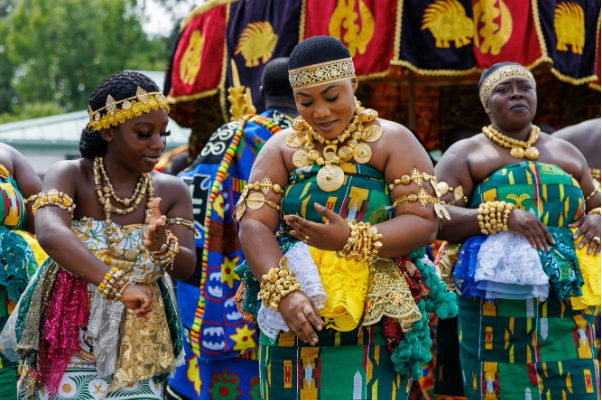
Figure 4: Traditional dancers offer colorful artistry to Akwasidae
Akwasidae in Maryland therefore offered something that a museum exhibit or history book cannot: a living African institution bringing its traditions directly into an African American community.
More than a royal visit
Otumfuo's American itinerary has also included the Millennium Excellence Awards, held at Washington's Warner Theatre on August 29. The awards recognize individuals of African heritage and others whose work has made significant contributions in areas including business, science, arts, philanthropy and public service. Among the honorees was Lagos State Governor Babajide Sanwo-Olu, who received the Global Transformation and Good Governance Prize under the royal patronage of Otumfuo.
Taken together, the events reveal a deliberate architecture behind the visit.
For African Americans watching the visit, perhaps the most important element is the conversation about what comes next.
Otumfuo is not presenting Africa simply as a place to visit, trace ancestry, or draw cultural inspiration from. He argues for a relationship in which Africans and the global Black diaspora can exchange knowledge, build institutions, invest capital, and preserve culture together.