Clotilda Descendant Becomes the First to Gain Benin Citizenship
Clotilda Descendant Becomes the First to Gain Benin Citizenship
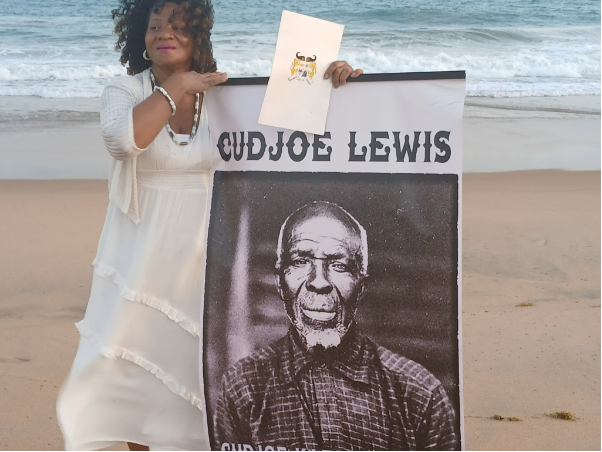
More than 160 years after one of history's most infamous slave voyages, a remarkable homecoming has taken place. Cassandra Lewis, a direct descendant of Cudjo Lewis, one of the last known survivors of the slave ship Clotilda, has become the first descendant of the ship's captives to be granted citizenship by the Republic of Benin.
This deeply symbolic milestone speaks to identity, memory, and the enduring ties between Africa and its global diaspora.
Figure 1: Cassandra Lewis poses with a portrait of her great-great-grandfather Cudjoe Lewis
A Story That Began with the Clotilda
The Clotilda occupies a unique place in history. In 1860—more than 50 years after the United States outlawed the transatlantic slave trade—it illegally transported approximately 110 Africans from what is now Benin to Alabama. After delivering its human cargo, the ship was deliberately burned and sunk in an attempt to conceal the crime.
Among those taken captive was Oluale Kossola, later known as Cudjo Lewis, who would become one of the last living survivors of the Middle Passage. Following emancipation, he and fellow survivors established Africatown near Mobile, Alabama, preserving many of the customs, traditions, and memories of the homeland they had been forced to leave behind. Their descendants have safeguarded that history for generations.
A Homecoming Across Generations
For Cassandra Lewis, the journey back to Benin was not simply an international trip—it was the culmination of a family history passed down through oral tradition. Growing up, she heard stories about Cudjo Lewis and the homeland he never forgot. Those stories inspired a lifelong desire to reconnect with her ancestral roots.
In May 2026, that dream became reality when Benin officially recognized her as a citizen, making her the first known descendant of the Clotilda captives to receive Beninese citizenship. Her recognition is more than a personal achievement; it powerfully acknowledges that descendants of those forcibly removed from Africa still belong to the continent.
Benin's Historic Citizenship Initiative
Lewis's citizenship was made possible by Benin's groundbreaking legislation recognizing the descendants of Africans who were enslaved and taken across the Atlantic. The law allows eligible Afro-descendants to obtain Beninese nationality by demonstrating genealogical links to ancestors deported during the transatlantic slave trade.
The initiative reflects Benin's broader commitment to reconnecting with the African diaspora. It also aligns with the African Union's recognition of the African diaspora as the continent's "sixth region" and seeks to address the enduring legacy of slavery through reconciliation, belonging, and cultural restoration.
Unlike traditional immigration programs, this legislation acknowledges that many descendants of enslaved Africans did not leave Africa by choice. Instead, it offers a pathway to reclaim an identity violently interrupted centuries ago.