South Country Profile Africa
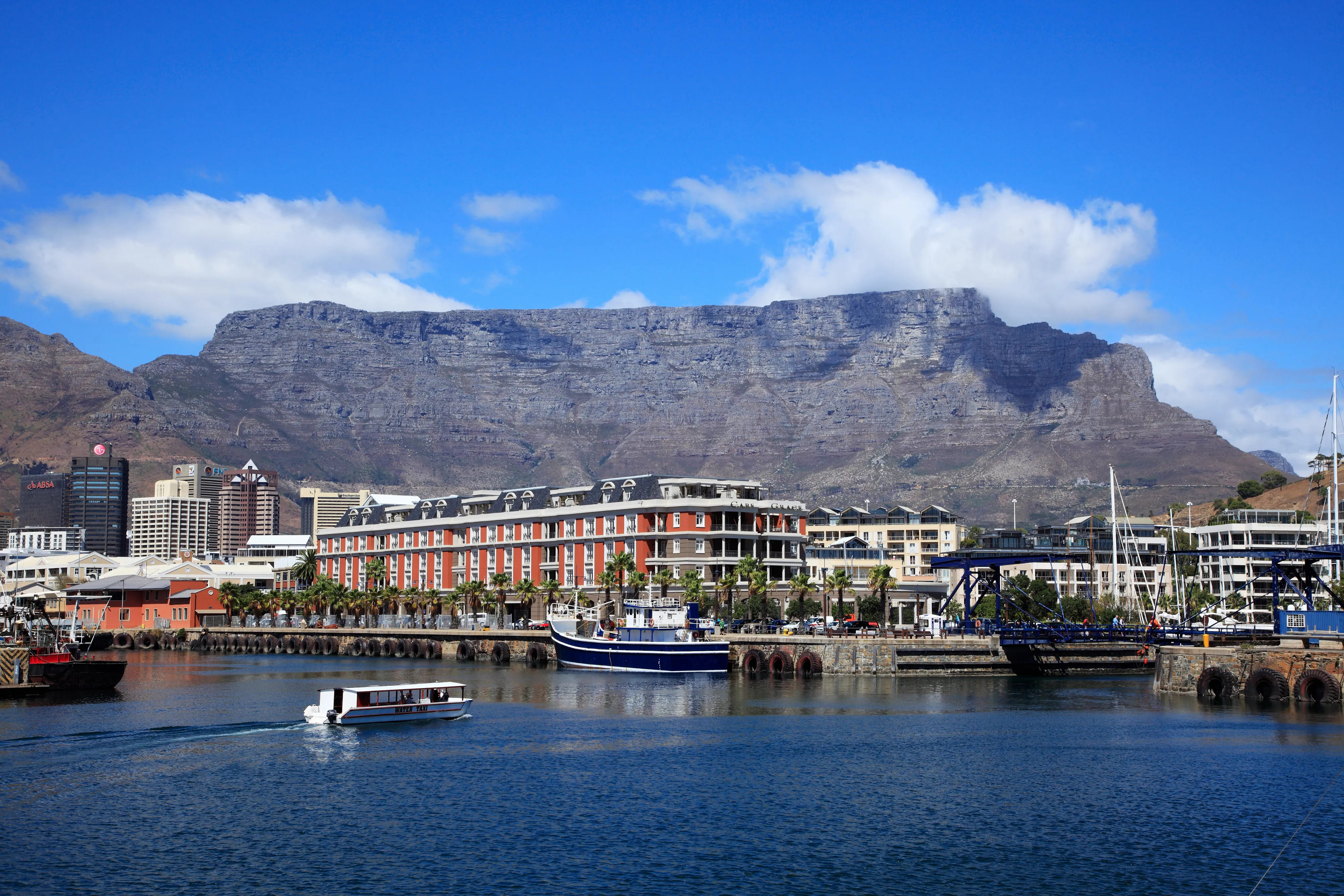
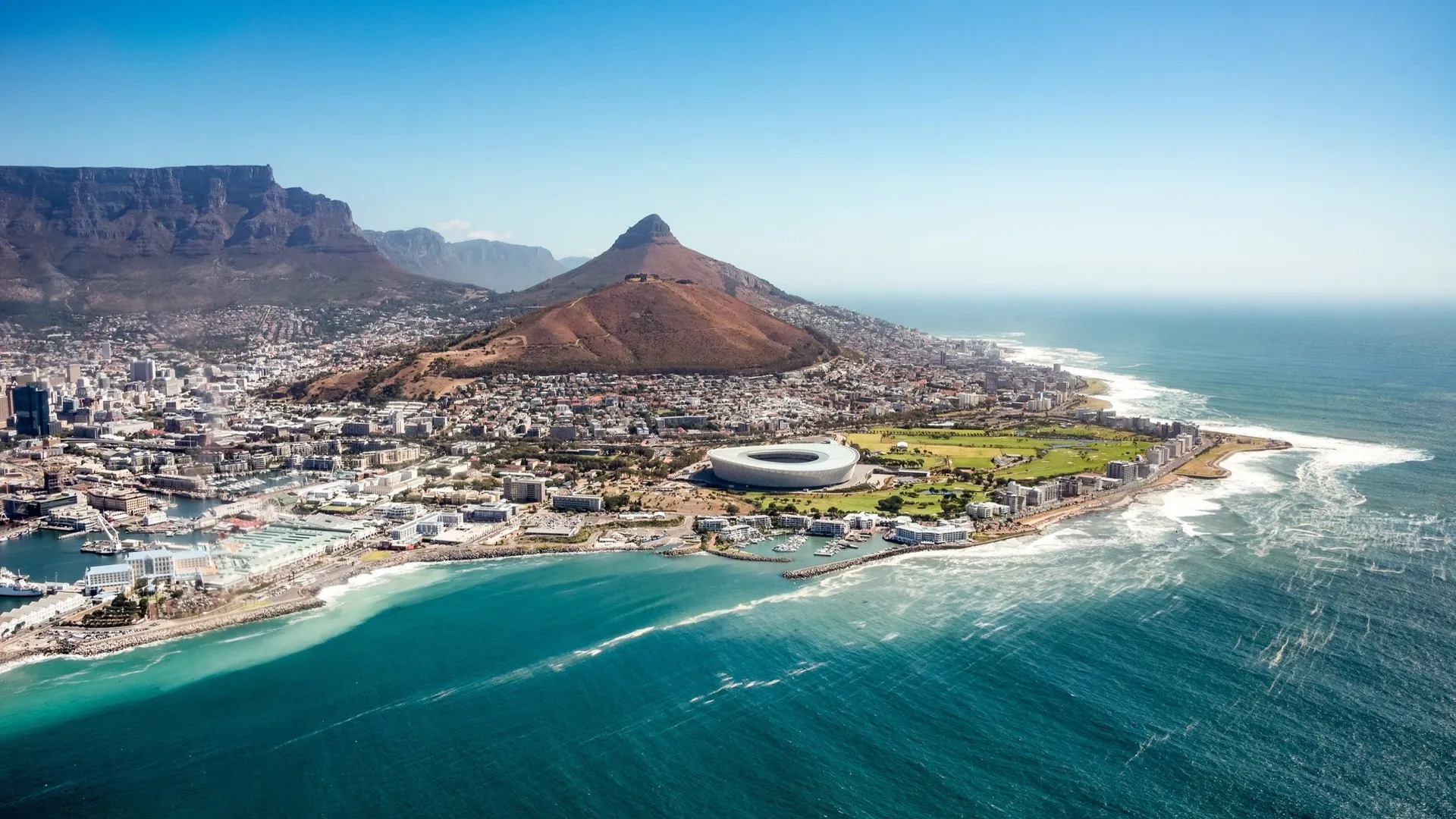
South Africa is an upper-middle-income country and the largest economy in Southern Africa. With cleaned beaches, natural attractions, and vibrant cosmopolitan cities. Southern Africa’s rich culture is a vibrant tapestry woven from its diverse ethnic groups, historical experiences, and unique natural environment. Known as the "Rainbow Nation," South Africa celebrates a mix of traditions, languages, art forms, and cuisines that reflect its dynamic heritage. Visitors to South Africa can expect to be greeted by a sense of history and met with exceptional culture that has long been associated with its people.
Geography
South Africa is well endowed with natural resources, including gold, oil, and bauxite. South Africa, officially the Republic of South Africa (RSA), is the southernmost country in Africa. Its nine provinces are bounded to the south by 2,798 kilometres (1,739 miles) of coastline that stretches along the South Atlantic and Indian Ocean; to the north by the neighbouring countries of Namibia, Botswana, and Zimbabwe; to the east and northeast by Mozambique and Eswatini; and it encloses Lesotho. Covering an area of 1,221,037 square kilometres (471,445 square miles), the country has over 62 million people. Pretoria is the administrative capital, while Cape Town, as the seat of Parliament, is the legislative capital. Bloemfontein has traditionally been regarded as the judicial capital. The largest and most populous city is Johannesburg, followed by Cape Town and the busiest port city in sub-Saharan Africa, Durban.
Economy
South Africa is well endowed with natural resources, including gold, platinum, and coal. South Africa has a mixed economy. Its economy is Africa's largest, most technologically advanced and industrialised. It also has a relatively high gross domestic product (GDP) per capita compared to other countries in sub-Saharan Africa US$16,080 at purchasing power parity as of 2023 ranked 95th.
South Africa is ranked 40th by total wealth, making it the second wealthiest country in Africa, in terms of private wealth South Africa has a private wealth of $651 billion making South Africa's population the richest in Africa followed by Egypt with $307 billion and Nigeria with $228 billion.
Currency
The South African Rand is the currency of South Africa. The currency code for Rand is ZAR, and the symbol is R. The South African Rand to dollar exchange rate changes frequently. You will be able to exchange dollars for South African Rand when you arrive in South Africa at the prevailing rate at that time. There is no limit on the amount of cash you bring into South Africa, but you must declare any amounts over $10,000. Lesser amounts do not need to be declared.
Language
South Africa has 12 official languages: Zulu, Xhosa, Afrikaans, English, Pedi, Tswana, Southern Sotho, Tsonga, Swazi, Venda, and Southern Ndebele (in order of first language speakers), as well as South African Sign Language which was recognised as an official language in 2023. In this regard it is fourth only to Bolivia, India, and Zimbabwe in number. While all the languages are formally equal, some languages are spoken more than others. According to the 2022 census, the three most spoken first languages are Zulu (24.4%), Xhosa (16.6%), and Afrikaans (10.6%). Although English is recognised as the language of commerce and science, it is only the fifth most common home language, that of only 8.7% of South Africans in 2022; nevertheless, it has become the de facto lingua franca of the nation.
Government
The Constitution of South Africa was adopted on 8 May 1996 and came into effect on 4 February 1997. It established a constitutional democracy with a government consisting of three branches: the Executive, Parliament and the Judiciary.
South Africa is a parliamentary republic, but unlike most such republics, the president is both head of state and head of government and depends for their tenure on the confidence of Parliament. The executive, legislature, and judiciary are all subject to the supremacy of the constitution of South Africa, and the superior courts have the power to strike down executive actions and acts of Parliament if they are unconstitutional. The National Assembly, the lower house of Parliament, consists of 400 members and is elected every five years by a system of party-list proportional representation. The National Council of Provinces, the upper house, consists of ninety members, with each of the nine provincial legislatures electing ten members.
Current President
Matamela Cyril Ramaphosa
Deputy President:
Paul Mashatile
History
South Africa's history is a rich tapestry shaped by indigenous cultures, colonization, resistance, and reconciliation. South Africa was originally inhabited by the San and Khoikhoi peoples, known for their hunter-gatherer and pastoralist lifestyles. Later, Bantu-speaking peoples migrated southward, bringing agriculture, ironworking, and complex societies like the Zulu and Xhosa.
In 1652, the Dutch East India Company established a supply station at the Cape of Good Hope. This marked the beginning of European colonization. The Khoikhoi and San peoples faced displacement and conflict. Over time, Dutch settlers (later called Boers) expanded into the interior, developing a distinct Afrikaner identity. In 1806, the British seized control of the Cape Colony. Their abolition of slavery in 1834 caused tensions with the Afrikaners, prompting the Great Trek (1836–1840s), where Afrikaner pioneers moved inland, founding the Orange Free State and Transvaal Republic.
The discovery of diamonds (1867) in Kimberley and gold (1886) in the Witwatersrand transformed South Africa's economy and society. The British sought control of these resources, leading to conflicts with the Afrikaners, culminating in the Anglo-Boer War (1899–1902). Britain defeated the Boers and unified the colonies into the Union of South Africa in 1910, under British dominion.
In 1948, the National Party institutionalized apartheid, a system of racial segregation that oppressed the majority black population. Non-whites were stripped of political rights, forced into segregated areas, and subjected to harsh laws.Resistance movements like the African National Congress (ANC) and leaders like Nelson Mandela, Oliver Tambo, and Walter Sisulu mobilized protests, strikes, and international support. Mandela’s imprisonment (1962–1990) became a global symbol of the fight against apartheid.Facing internal unrest and international pressure, apartheid began to crumble. In 1990, President F.W. de Klerk released Nelson Mandela and began negotiations to end apartheid. In 1994, South Africa held its first democratic elections, electing Nelson Mandela as the first black president.
Climate
The weather in South Africa varies significantly due to its diverse geography. The coastal regions, such as Cape Town along the Atlantic coast and Durban along the Indian Ocean, enjoy a mild, maritime climate, while the interior highlands, including Johannesburg and Pretoria, have a more temperate climate with hot summers and cool winters. The northern and northwestern regions, including parts of the Kruger National Park, are generally hot and dry.
The coolest period of the year is during May to August, South Africa’s winter months, when daytime temperatures in the highlands typically range from 57°F to 72°F, with cooler evenings that can drop near 45°F. Coastal regions remain milder, with temperatures rarely falling below 50°F.
From November to March, South Africa experiences its warmest months. Coastal areas see daytime highs of 77°F to 86°F, while the interior can reach 86°F to 95°F or higher. Rainfall during this period is generally concentrated in the summer months, especially in the northeastern regions. Overall, South Africa’s diverse climate allows for year-round travel, whether you are exploring vibrant cities, wildlife safaris in national parks, or enjoying the beaches along the Atlantic and Indian Ocean coasts.