Egypt Country Profile
Egypt has over 100 million people, with a land area of just 386,102 square miles. Most of the population lives in Cairo, or along the Nile or the Mediterranean Coast. With treasures as timeless as the Temples, Pyramids, and the magical Nile River, Egypt captivates all who visit. Most of the country’s ancient treasures were built during the time of the pharaohs.
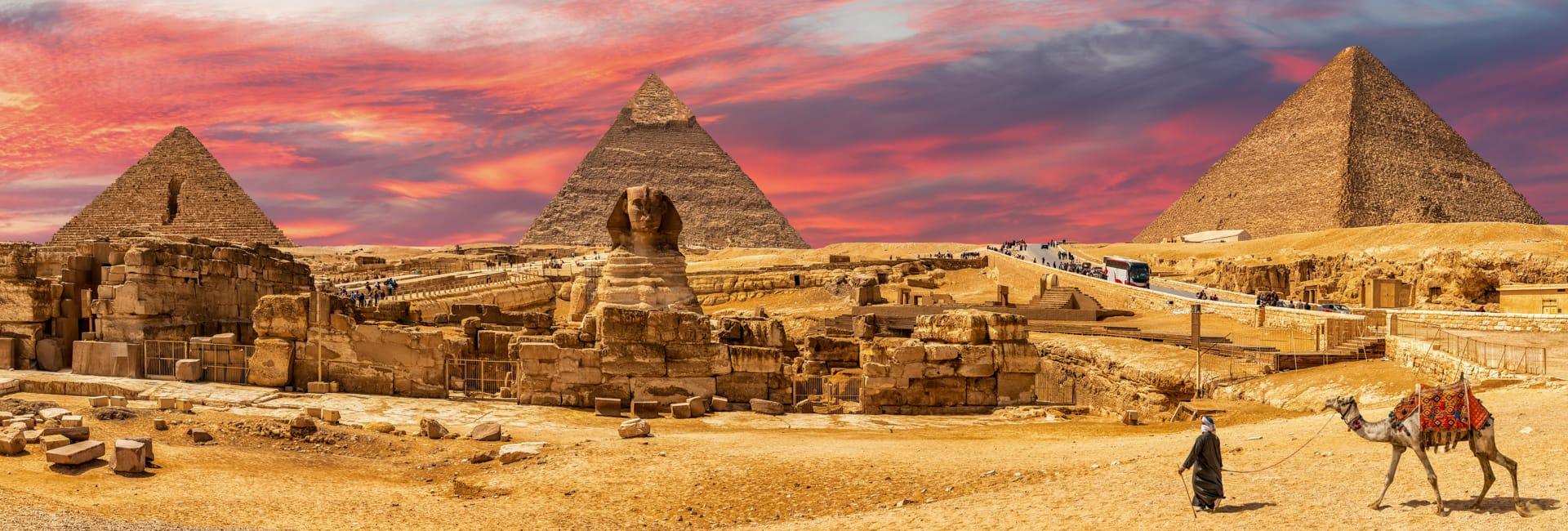
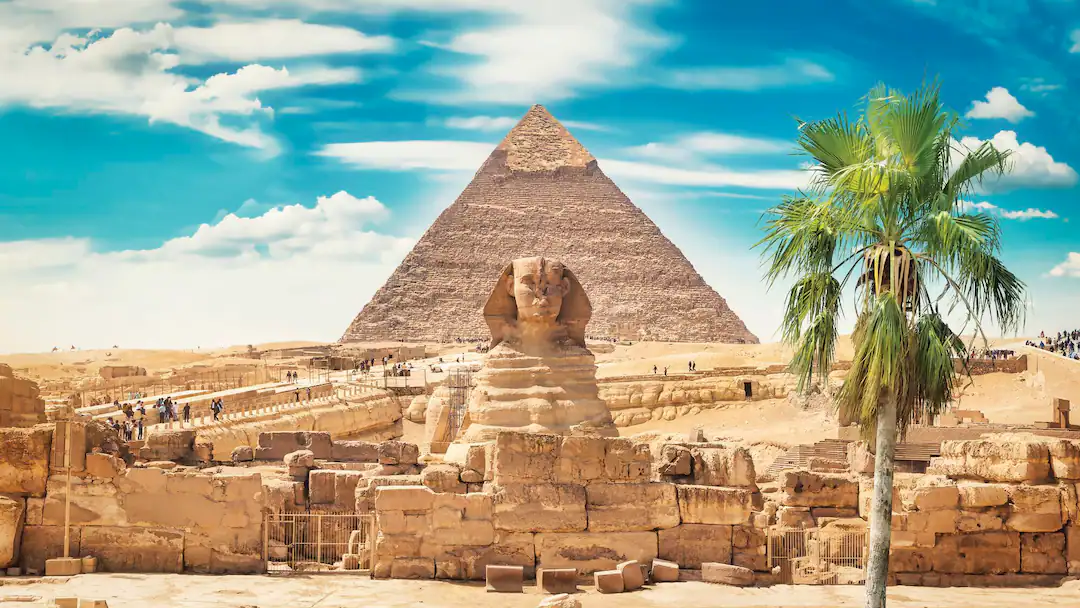
The Pyramids of Giza (the sole survivors of the Seven Ancient Wonders of the World); the lotus- columned temples of Luxor and Karnak; the Valley of the Kings; Aswan and the Temples of Abu Simbel: strung along the Nile, are monuments that represent the legacy of one of the most written and talked about periods of human history. About 90% of Egypt’s population is Muslim, with most of the remainder being Christian, including followers of the Coptic Christian faith. There is also a small Jewish population.
Ask permission when taking pictures of someone, especially women and be aware that some traditionally-dressed locals demand money when they ‘pose’ outside historic sites, especially temples and pyramids
Egypt is a developing country with a diversified economy, the largest in Africa, the 38th-largest economy in the world, by nominal GDP, and the 127th by nominal GDP per capita.
Egypt is a country with a reputation for being one of the friendliest in Africa. Egypt is divided into 27 administrative regions, known as governorates. Each governorate is headed by a governor who the President appoints. These governorates vary in size, population, and importance. Some include major cities like Cairo and Alexandria, while others cover vast desert areas.
With unspoiled beaches, natural attractions, and vibrant cosmopolitan cities, Egypt has rich ethnic diversity, abundant historical legacies, a strong cultural heritage, and ageless traditions. Visitors to Egypt can expect to be greeted by a sense of history and met with exceptional hospitality that has long been associated with its people.
Geography
Egypt has coastlines on the Mediterranean Sea, the River Nile, and the Red Sea. Egypt borders Libya to the west, Israel to the east, and Sudan to the south. It has an area of 387,050 square miles.
The longest straight-line distance in Egypt from north to south is 880 miles, while east to west measures 792 miles. Egypt has over 1,800 miles of coastline on the Mediterranean Sea, the Gulf of Suez, and the Gulf of Aqaba.
Egypt is the most populous country in the Arab world and the second-most populous on the African Continent. Its current population is over 116 million, with nearly 100% of the people living in Cairo and Alexandria or along the banks of the Nile.
Economy
Egypt has natural resources, including petroleum and natural gas, iron ore, phosphates, manganese, limestone, gypsum, talc, asbestos, lead, and zinc. Approximately one-third of the Egyptian labor is directly engaged in farming or food processing.
Egypt is also a major producer of textiles, chemicals, petrochemicals, construction, iron, steel, aluminum, cement, and military equipment.
Currency
The Egyptian Pound is the currency of Egypt. The Egyptian pound is abbreviated to EGP, E£, or in Arabic ( م.ج). One Egyptian Pound is subdivided into smaller currency denominations known as piastres and millimes. 1 EGP = 100 piastres = 1000 millimes.
The pound-to-dollar exchange rate changes frequently. When you arrive in Egypt, you can exchange dollars for pounds at the prevailing rate. There is no limit on the cash you bring into.
Egypt, but as stated previously, you must declare any amount over $10,000. Lesser amounts do not need to be declared. There will be numerous opportunities for you to exchange your dollars for the Egyptian pound.
Language
Although Standard Arabic is the official language in Egypt, citizens also speak English. Therefore, you should not have difficulty communicating with locals and thoroughly enjoying every aspect of your stay in Egypt.
Government
Egypt is a republic with a semi-presidential system. The President is the head of state, while the Prime Minister is the head of government. Egypt’s government is based on a combination of executive, legislative, and judicial branches, and elections are held for the President and Parliament.
Current President
President Abdel Fattah el-Sisi Current
Prime Minister
Mostafa Madbouly
History
Egypt, one of the oldest civilizations in the world, dates to around3100 BC when the ancient Egyptians established a powerful kingdom along the Nile River. Renowned for its iconic monuments, such as the Pyramids of Giza, the Sphinx, and the temples of Luxor, Egypt was a center of science, art, and culture in antiquity.
Over centuries, Egypt was ruled by various dynasties, including the Pharaonic, Greco-Roman, and Islamic periods. Today, Egypt’s historical legacy continues to captivate visitors with its rich archaeological heritage.
Safety
We want to reassure you that Egypt is a peaceful and secure travel destination despite the ongoing unrest in the region. We further wish to assure you that as of now, nothing regarding the conflicts in the area has impacted tour operations in Egypt.
While Egypt continues to welcome travelers worldwide without incident, no one knows what the future might hold. We therefore strongly recommend that all tour members buy travel insurance. This will provide an extra layer of security and peace of mind and ensure you are covered in the unlikely event of any unexpected circumstance.
As stated above, our company offers travel insurance through Allianz Travel. Click here for a no-obligation quote